Role: Learning Designer | Sector: Higher Education | Tools: Canvas, Cidi Labs, Microsoft 365
The Challenge
The Tax Institute needed to bring staff up to speed with using GenAI for assessment design and marking — but the starting point wasn’t encouraging. Survey data showed a lot of hesitation, uncertainty, and a fear that AI would either replace people or get them into trouble with TEQSA compliance. The brief was to take a room full of skeptics and turn them into confident, compliant users who understood where AI genuinely adds value in their day-to-day work.
The Solution
I started by digging into the data — not just the survey results, but the language people used when talking about AI. It quickly became clear that what they needed wasn’t a technical deep dive; they needed clarity, reassurance, and a practical entry point.
So I shaped the training around real staff concerns:
What is safe to delegate to AI? Where does human judgment matter? How do you use AI without breaching regulations?
I worked closely with AI-specialist tax experts to make sure everything we taught aligned with rigorous TEQSA expectations. Once the content was validated, I built a polished, responsive learning experience directly in Canvas using Cidi Labs. The design intentionally modelled what “good GenAI-supported learning design” looks like, giving staff both the theory and a real example to follow.
The Result
The training shifted perceptions almost immediately. Staff who were previously unsure — or openly resistant — began experimenting with AI as a helpful co-pilot rather than something to avoid. By grounding the program in practical benefits (like reducing marking load and improving feedback quality), I helped turn hesitation into curiosity and capability.
Most importantly, the organisation now has a legally compliant, clearly structured framework for safe GenAI use, giving staff the confidence to innovate without stepping outside regulatory boundaries.
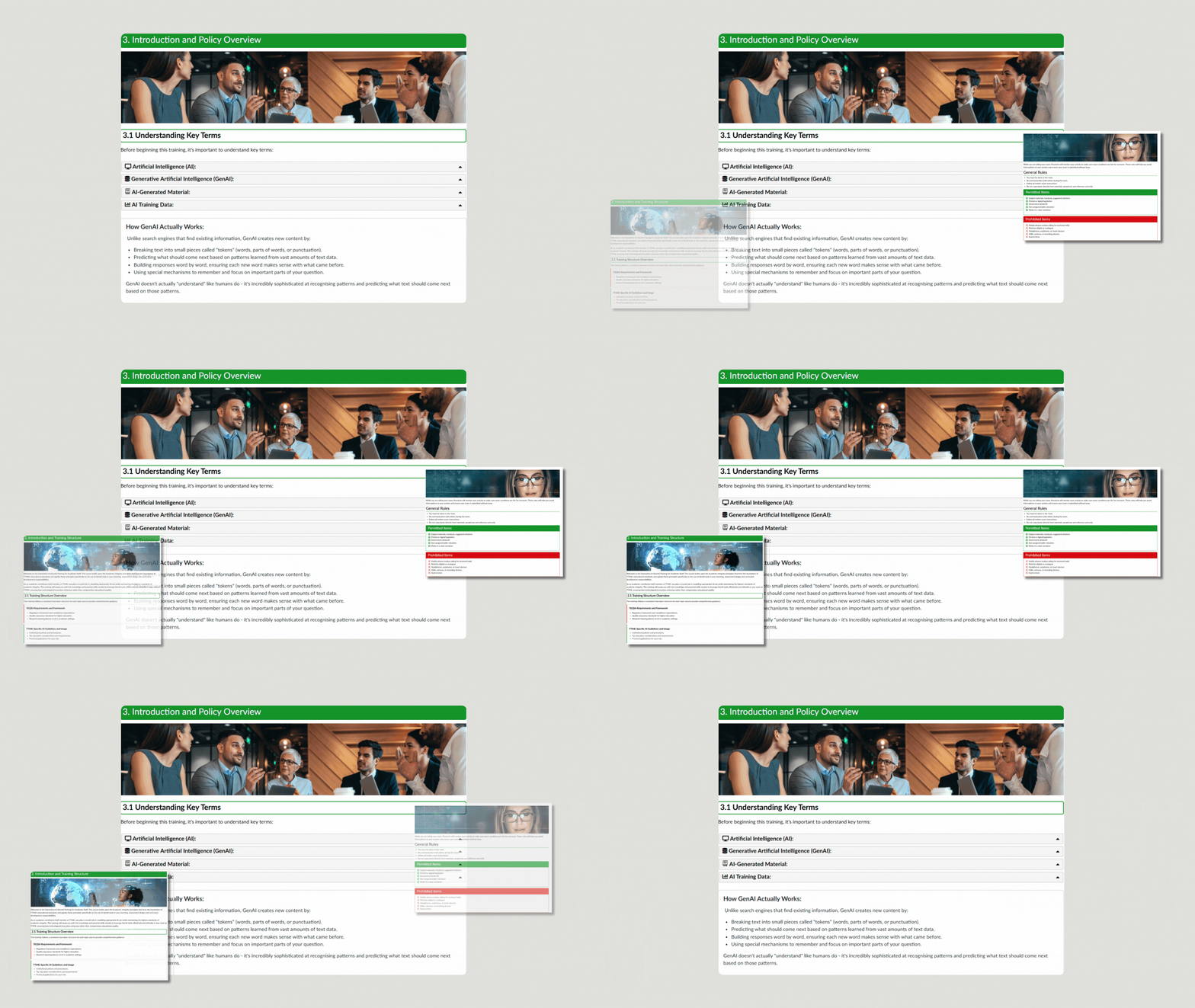
I didn’t just train staff—I built a shared GenAI foundation that supported every learner across the institution.
Role: Learning Designer | Sector: Higher Education | Tools: Canvas, Cidi Labs, Microsoft 365
The Challenge
As GenAI tools became mainstream, students at TTIHE were using them in wildly different ways. Some were confident “power users” pushing the limits of what AI could do for them, while others barely knew what a prompt was. The result was predictable: confusion about academic integrity, blurred boundaries around acceptable use, and a growing gap between intention and compliance.
Students needed clarity — not scare tactics — and the Institute needed a simple, engaging way to help every learner understand how to use AI ethically and effectively.
The Solution
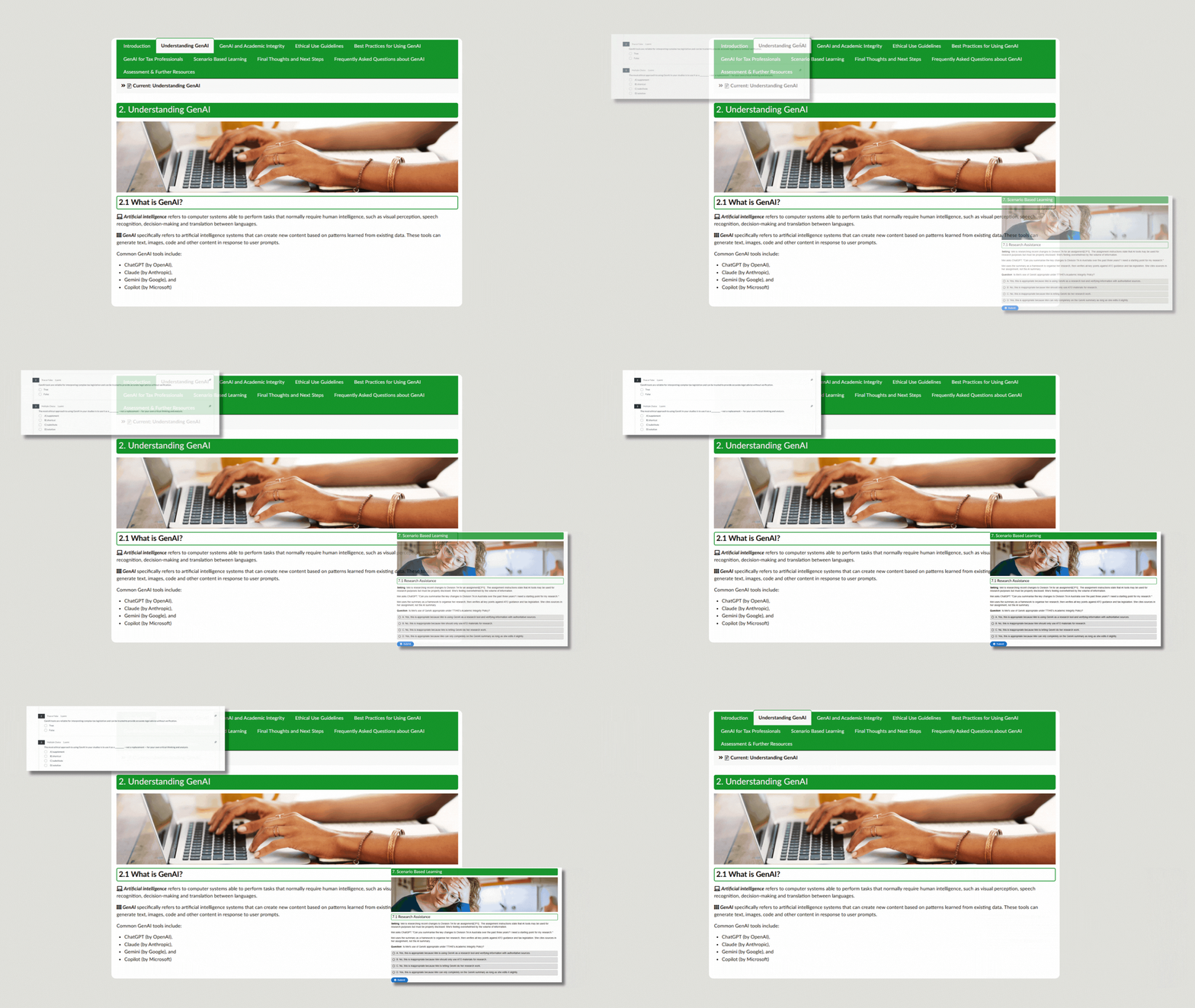
I designed a Canvas module that worked as both a skills guide and a safety net. It didn’t lecture students — it walked them through real examples, comparisons, and scenarios that made the rules feel practical and relevant.
I started by defining the boundaries in a visual, unmistakably clear way: what counts as acceptable help, what crosses into plagiarism, and why. From there, I reframed AI as a thinking partner rather than a shortcut, introducing learners to the basics of prompting and how to use AI to support — not replace — genuine learning.
To bring the policy to life, I built interactive scenarios where students had to navigate ethical grey areas and apply institutional rules to realistic study situations. This made the learning feel authentic and helped students internalise the expectations.
The Result
The module quickly became the baseline for digital literacy across all subjects. Students shifted from quiet misuse or uncertainty to transparent, confident engagement with AI tools. And because every learner completed a final verification activity, the Institute gained clear evidence that each student understood the policy before beginning their studies.
The result was a win for both sides: students felt supported and informed, and the organisation strengthened academic integrity across the whole cohort.